
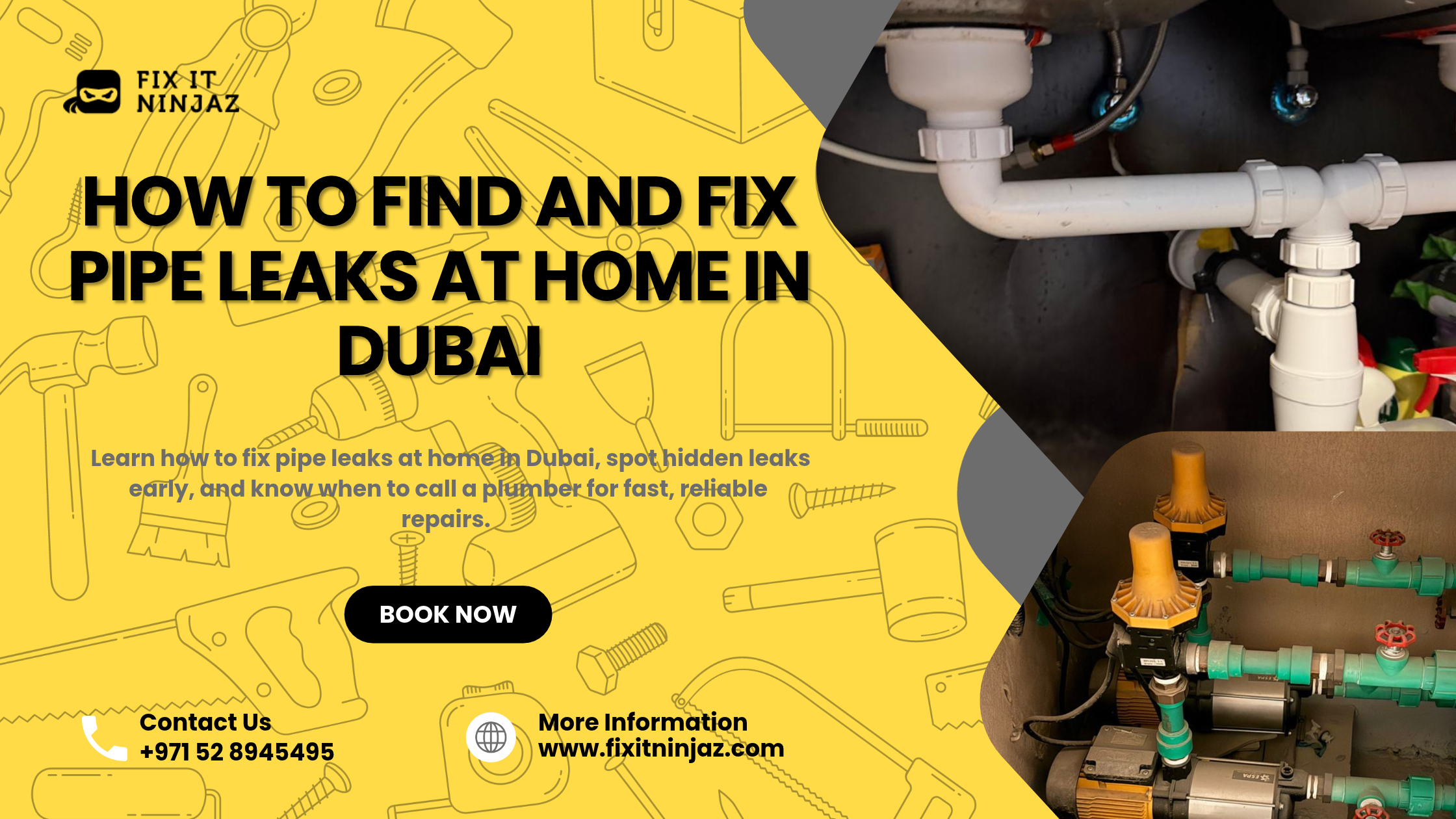
How to Fix Pipe Leaks in Dubai: Causes, Detection, and Solutions
Water leaks rarely start big. They usually begin as a slow drip behind a wall or under a sink, quietly increasing your water bill and damaging your property over time. In a city like Dubai, where plumbing systems face regular use and challenging environmental conditions, knowing how to fix pipe leaks early can save you from expensive repairs and structural damage.
This guide explains how to detect leaks, what causes them, and how to fix pipe leaks safely before they get worse. It also covers when to handle a minor plumbing issue yourself and when to call a professional plumber in Dubai.
Why Pipe Leaks Are a Common Problem in Dubai
Homes and apartments in Dubai can experience plumbing problems for several reasons. Aging pipes, worn-out fittings, poor installation, and irregular water pressure can all contribute to pipe leaks in Dubai.
Many residents do not notice a problem until it appears as damp walls, mold, peeling paint, or a sudden increase in water bills. That is why early detection matters as much as knowing how to fix pipe leaks correctly.
The Dubai Electricity and Water Authority (DEWA) recommends regularly checking internal water connections and repairing leaks promptly with the help of a specialised technician. DEWA also explains that customers are responsible for maintaining internal connections after the water meter.
According to the U.S. Environmental Protection Agency (EPA), undetected household leaks can waste significant amounts of water and increase utility bills. If you suspect a plumbing issue, professional plumbing services in Dubai can help identify the source and determine the right repair.
How to Identify Pipe Leaks at Home
Before attempting a repair, confirm that a leak is present. Some leaks are easy to spot, while others develop behind walls, beneath floors, or around concealed plumbing connections.
Here are common warning signs to look for.
1. Unusually High Water Bills
If your water consumption habits have not changed but your bill has increased, a hidden leak could be responsible. Check your water meter after turning off all taps and water-using appliances. If the meter continues to register water usage, there may be a leak somewhere in your plumbing system.
DEWA also recommends monitoring water consumption and checking internal connections when usage appears unusually high. Its High Water Usage Alert guidance explains how customers can investigate possible leaks inside their properties.
2. Damp Patches or Water Stains
Walls, ceilings, and floors may develop yellow, brown, or dark patches when water escapes from concealed pipes. You might also notice peeling paint, bubbling wallpaper, or swollen flooring.
Do not ignore these signs. Even if the affected area feels dry, the leak may still be active behind the surface.
3. Mold or Musty Smells
A persistent musty smell can indicate moisture trapped inside walls, cabinets, or flooring. Mold may also appear as dark or discolored spots around damp areas.
The Centers for Disease Control and Prevention (CDC) explains that mold can grow in areas affected by plumbing leaks and other moisture problems. It recommends fixing the underlying water issue to prevent further growth.
4. Water Meter Test
A water meter test can help you identify a possible hidden leak.
Follow these steps:
- Turn off all taps and water-using appliances.
- Make sure toilets, washing machines, and other fixtures are not using water.
- Check the reading on your water meter.
- Wait for a short period without using any water.
- Check the meter again.
If the reading changes while all water sources remain switched off, investigate further. The test can indicate a leak, but it will not identify its exact location.
These warning signs can help you decide whether to fix pipe leaks yourself or arrange a professional inspection.
Common Causes of Pipe Leaks in Dubai Homes
Understanding the cause of a leak helps determine the most suitable repair. Several issues can lead to water leaks in Dubai, including:
- Corroded or aging pipes: Older plumbing materials can deteriorate, weaken, and develop small openings over time.
- Poor pipe installation: Incorrect fittings, loose connections, and improper installation can cause recurring leaks.
- Water pressure issues: Irregular or excessive pressure can put stress on pipes, joints, and plumbing fixtures.
- Damaged seals: Worn washers, rubber seals, and connectors around sinks, showers, and toilets can allow water to escape.
- AC drainage problems: Blocked or damaged air conditioner drain lines can cause water to collect around indoor units and nearby surfaces.
In many apartments, concealed piping makes leaks difficult to locate. A professional inspection can help identify the source without unnecessary damage to walls or flooring. For AC-related drainage problems, you can also explore FixItNinjaz air conditioner repair and maintenance services.
Step-by-Step: How to Fix Pipe Leaks at Home
Not every plumbing issue requires extensive repair work. Some minor leaks around accessible fittings can be managed with basic tools. However, safety should always come first.
Here is how to approach a small, visible leak.
Step 1: Turn Off the Water Supply
Start by locating the relevant isolation valve or main water shut-off valve and turning off the water supply. This prevents additional water from escaping while you inspect the affected area.
If water is spreading near electrical outlets, switches, or appliances, avoid touching the wet area or electrical equipment. Keep people away and contact a qualified professional.
Step 2: Locate the Leak
Once the water supply is off, inspect accessible plumbing connections and fixtures. Check:
- Pipes underneath kitchen and bathroom sinks
- Connections behind toilets
- Shower and bathtub fittings
- Visible pipe joints
- Washing machine and dishwasher connections
- Water heater connections
Look for dripping water, corrosion, loose fittings, or visible cracks. If you cannot identify the source, avoid opening walls or floors yourself.
Step 3: Use a Temporary Seal for Minor Leaks
For a small leak on an accessible pipe, a suitable pipe repair tape or repair clamp may provide temporary protection until a plumber completes the repair.
Epoxy putty may also be suitable for certain minor repairs, but only when the product is compatible with the pipe material and application. Follow the manufacturer's instructions carefully.
Remember that these methods are temporary. They are not a substitute for replacing damaged pipe sections or repairing faulty connections.
Step 4: Replace Damaged Fittings
If the leak comes from a loose or damaged connector, washer, or fitting, replacing the faulty component may resolve the problem.
However, the correct replacement depends on the pipe material, connection type, and plumbing system. Avoid forcing fittings or using unsuitable materials, as this can create additional damage.
Step 5: Test the System
After a repair, restore the water supply gradually and inspect the affected area. Check whether the connection remains dry and monitor it for recurring drips.
If water continues to escape, shut off the supply again and arrange a professional inspection.
These steps may help with minor plumbing issues, but complex problems require professional attention. To properly fix pipe leaks, you need to address the underlying cause rather than relying on repeated temporary patches.
When to Call a Professional Plumber in Dubai
Not every leak should be handled as a DIY task. Contact a qualified plumber in Dubai if you notice any of the following:
- The leak is inside a wall, ceiling, or underground.
- Water pressure suddenly drops without an obvious reason.
- The same pipe or fitting keeps leaking after repairs.
- You notice widespread dampness, mold, or structural damage.
- A pipe has cracked, burst, or become severely corroded.
- Water is leaking near electrical equipment or wiring.
Professional plumbers may use tools such as acoustic leak detectors, thermal imaging equipment, and moisture meters to investigate concealed leaks. The appropriate method depends on the plumbing system and the suspected location.
The ASHRAE technical resources also provide building professionals with guidance on maintaining building systems, including plumbing-related considerations.
For hidden or recurring problems, professional plumbing services can help identify the source and carry out the required repair.
Why DIY Fixes Are Not Always Enough
DIY methods can help with surface-level leaks, but they do not always resolve deeper plumbing issues. A temporary patch may stop visible dripping while the underlying pipe damage continues.
This is especially concerning with water leaks in Dubai, where concealed plumbing connections can make the source difficult to identify.
Repeated DIY repairs without proper diagnosis may lead to:
- Continued water loss
- Damage to walls, ceilings, and flooring
- Recurring dampness and mold growth
- Higher water bills
- More extensive plumbing repairs
The UAE Government Portal provides official information about reporting water supply failures and emergencies in the UAE. For internal plumbing problems, however, you should contact your building maintenance team or a qualified plumbing professional.
Benefits of Hiring Professional Plumbing Services Across Dubai
When you choose professional help, you get a more thorough assessment of the plumbing issue instead of relying on a temporary solution.
Here are some benefits of hiring experienced technicians:
- Accurate leak detection: Professionals can investigate visible and concealed leaks using suitable inspection tools.
- Appropriate repair methods: They can determine whether a pipe needs sealing, fitting replacement, or complete repair.
- Reduced water damage: Timely repairs help limit damage to walls, floors, cabinets, and other property fixtures.
- Prevention of recurring issues: Identifying the underlying cause helps reduce the likelihood of repeated leaks.
- Safer repairs: Qualified technicians can assess plumbing problems that may involve electrical hazards or structural damage.
This is why homeowners often rely on professional plumbing services across Dubai rather than repeatedly applying temporary DIY fixes.
If you need help with a leaking pipe, damaged fitting, or recurring plumbing issue, explore FixItNinjaz plumbing repair services for professional assistance.
Preventing Future Pipe Leaks
Once you fix pipe leaks, prevention should become the next priority. Regular inspections can help you identify small plumbing problems before they cause extensive damage.
Here are some practical steps to follow:
- Inspect visible pipes regularly: Look for corrosion, cracks, loose joints, and signs of moisture.
- Monitor water pressure: Ask a plumber to investigate unusually high or fluctuating pressure.
- Check under sinks: Inspect kitchen and bathroom cabinets for dampness or dripping connections.
- Examine water tanks: Check tanks and their connections for visible damage or overflow. FixItNinjaz also offers water tank cleaning and maintenance services.
- Schedule routine plumbing inspections: Regular maintenance can help identify worn fittings and deteriorating pipes.
- Address small drips promptly: Do not wait for a minor leak to become a larger plumbing problem.
For additional guidance, DEWA's recommendations on checking internal water connections explain why regular inspections are important for preventing water waste and property damage.
Final Thoughts
Pipe leaks are not just minor inconveniences. If ignored, they can lead to expensive repairs, water damage, and mold growth. The key is to act early, identify the source, and understand when you can handle a minor issue and when you need professional help to fix pipe leaks.
In Dubai, regular plumbing inspections and timely repairs can help protect your property and reduce unnecessary water waste.
If you notice a leak or suspect a hidden plumbing issue, do not delay the repair. Contact FixItNinjaz to discuss your plumbing concerns and arrange professional assistance.
FAQ
1. What are the common signs of a hidden pipe leak?
Common signs include unusually high water bills, damp patches on walls or ceilings, peeling paint, musty smells, mold growth, and unexplained changes in water pressure. A water meter test can also help identify a possible hidden leak.
2. Can I fix a leaking pipe myself?
You may be able to manage a minor leak on an accessible pipe using a suitable temporary repair product. However, cracked pipes, concealed leaks, recurring problems, and damaged water supply lines should be handled by a qualified plumber.
3. What should I do if I find a water leak in my Dubai home?
Turn off the relevant water supply if it is safe to do so, move belongings away from the affected area, and avoid contact with nearby electrical equipment. Contact your building maintenance team or a professional plumber to inspect and repair the leak.
4. How can I check for hidden water leaks at home?
Turn off all taps and water-using appliances, then check your water meter. Wait without using water and compare the reading. If it changes, a leak may be present. A professional inspection can help locate the source.
5. When should I hire professional plumbing services in Dubai?
Hire a professional if the leak is concealed, a pipe has burst, water pressure changes unexpectedly, or the same issue keeps returning. Professional inspection is also recommended when you notice mold, extensive dampness, or damage to walls and flooring.